Coordinated buys, utility and rotations for winning short-format competitive matches
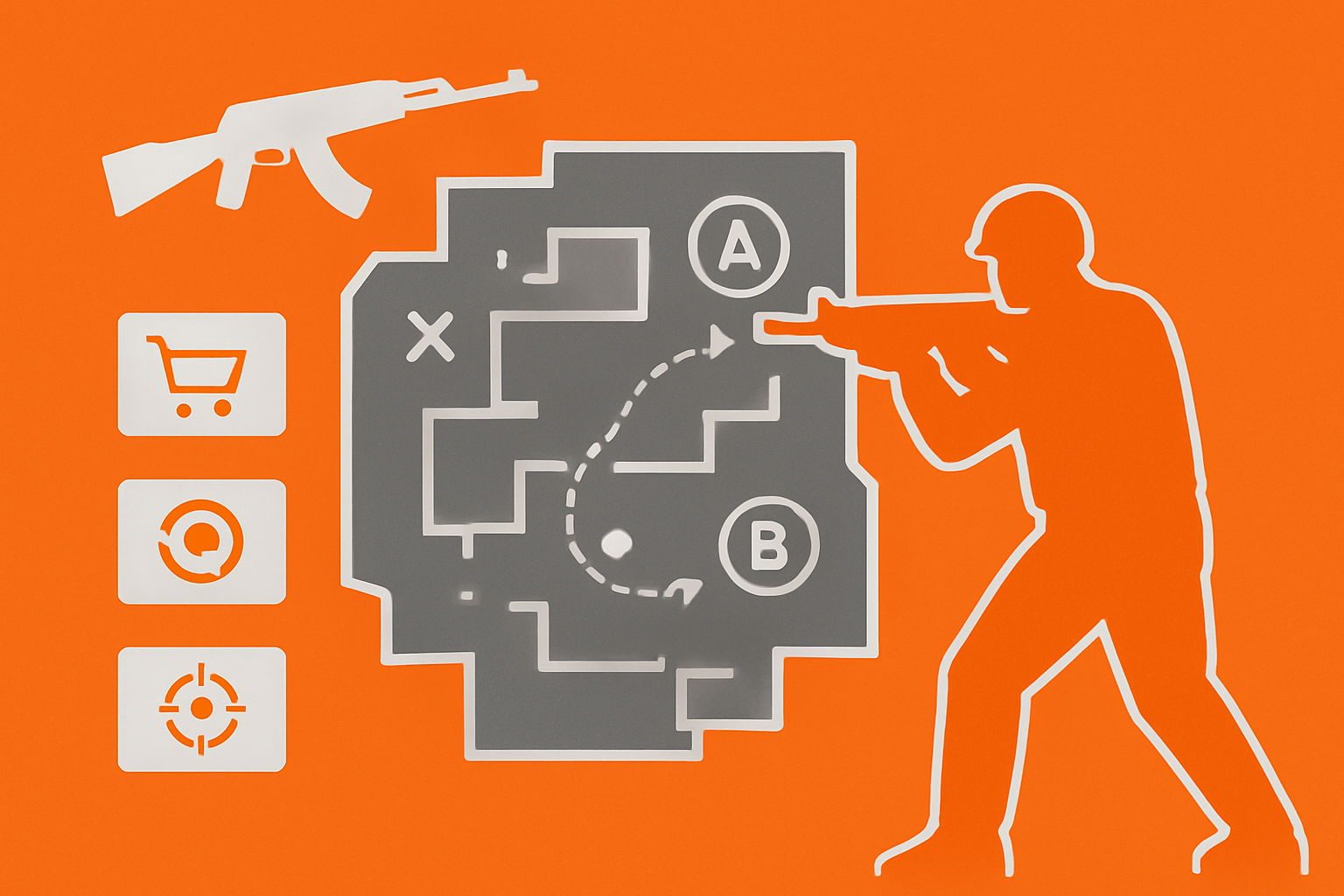
Short-format competitive matches leave little time to recover from a scattered opening: an uncoordinated buy, a late utility call, or a rotation that splits the team can decide the next fight before anyone has settled into a plan. Coordinated buys and rotations help teams turn limited preparation time into a clear opening, a shared response to new information, and a reset that preserves options for the next round or engagement.
The useful principle is simple: choose the team’s tools and composition together, decide what information will trigger a move, and make sure every player understands the same fallback. The details depend on the game and mode. An economy-based shooter, a draft-led hero mode, and a battle royale do not share identical purchase systems, but each rewards teams that connect preparation, utility, movement, and communication rather than treating them as separate tasks.
What coordinated buys and rotations mean in short-format matches
A coordinated buy is a team decision about what to bring into the next engagement. In a game with a purchase phase, that can mean aligning spending and equipment choices around a shared plan. In a draft-based mode, the equivalent may be selecting heroes or a composition that can execute the same opening and adapt to likely opponents. In a mode with flexible team compositions, it means choosing roles and capabilities as a unit instead of assuming someone else will cover a gap.
A rotation is a deliberate change in position, route, or objective focus. It is not simply moving because the current location feels quiet. A sound rotation follows information: a teammate spots a commitment, a route becomes unsafe, the opposing team shows a weakness, or the current plan no longer offers a reasonable path to the objective. It also assigns responsibilities for the move, including who gathers information, who protects the transition, and who is ready to stop or reverse it.
These ideas connect through a team’s available options. A purchase or draft gives the team a set of capabilities; utility helps create or deny space; a rotation determines where those capabilities can be applied. If the team buys or drafts for one plan but moves in a way that abandons its strengths, the original decision loses value. If the team rotates with no shared purpose, utility and positioning can become disconnected.
Direct answer: Coordinate short-format matches by agreeing on a team-wide buy or composition, assigning utility and information roles, choosing a clear movement trigger, and keeping a fallback route. Review the result after each engagement so the next decision reflects what the team learned.
Short formats make this discipline especially useful because there may be fewer opportunities to repair a poor start. Blizzard’s Season 18 announcement for Overwatch 2 describes Stadium Quick Play as offering shorter matches, a rapid-fire economy, and Draft Mode for counter-picking before the first fight. Those design choices make the pre-game huddle and the first shared decision consequential: players have less room to wait for a plan to emerge on its own.
That does not mean every team should force an aggressive opening or always move together in a single group. Coordination is not the same as rigidity. The goal is to make individual actions reinforce a common objective, while leaving room to respond when the opponent or the match state changes.
Build a coordinated buy or composition around a win condition
Before choosing equipment, heroes, or roles, state what the team is trying to make possible. A win condition should be concrete enough to guide the next few decisions: take control of a useful area, force the opponent to spend a defensive resource, secure a safe route to an objective, or create a favorable engagement. Avoid plans that amount only to ‘play well’ or ‘push together.’ Those phrases do not tell teammates what to buy, where to move, or when to stop.
Turn the plan into a capability checklist
Once the win condition is clear, list the capabilities needed to pursue it. The exact categories vary across games, but teams can ask whether they have enough information gathering, space creation, protection during movement, pressure to challenge a contested area, and a way to disengage if the opening fails. This is a planning checklist, not a demand that every lineup contain a specific character or item.
- Access: What lets the team reach the chosen area or engagement without arriving one player at a time?
- Information: Who checks the route, watches for a response, or confirms that the opponent has committed elsewhere?
- Pressure: Which player or resource makes the opponent respect the team’s approach?
- Cover: What protects the transition or helps teammates avoid being isolated?
- Exit: If the opponent denies the opening, where can the team regroup without turning a failed attempt into a second mistake?
In an economy-based game, the answers may influence how the team spends and whether it prioritizes a shared level of equipment or a particular utility package. In a draft-based mode, the answers may influence hero selection and role coverage. Do not assume that a particular purchase or hero is universally correct: maps, mode rules, team strengths, and opponent tendencies change the value of each choice.
Make trade-offs visible before committing
A team decision is stronger when players understand what it gives up. A plan built around early pressure may leave fewer resources for a prolonged defense. A composition chosen to counter a likely opponent may be less comfortable if the opponent changes direction. A flexible lineup can offer more answers but may not have the same concentrated strength as a specialized one. These are strategic trade-offs, not evidence that one style is always superior.
Say the trade-off out loud in one sentence. For example: ‘We are choosing this setup to control the first route, so if the opponent shows a stronger presence there, we regroup rather than feed the same engagement.’ That phrasing links the choice to the response. Teammates do not need a long debate during a short preparation window; they do need to know what would make the original plan no longer sensible.
Overwatch 2’s 2026 competitive design provides a relevant example of team-wide choice being supported at the system level. Blizzard’s June 30, 2026 patch notes describe the Roster as a way for players to share favorite heroes to enable better coordination. The same notes say Hero Bans show team vote totals and preferred-hero weighting, while the lobby-ban system combines both teams’ votes. These features do not choose a strategy for a team; they make preferences and group decisions more visible, which can help players discuss a plan before the match begins.
Blizzard’s Season 18 Stadium Quick Play announcement also presents Draft Mode as a pre-game huddle for counter-picking before the first fight. For teams, the practical lesson is to use the draft as a conversation about the opponent and the opening, not as a sequence of isolated personal picks. Agree on the capability the team needs, explain the reason for a selection, and check that the rest of the lineup can support it.
Assign utility and information before the opening engagement
Utility is most valuable when teammates know what it is supposed to accomplish. A resource can reveal information, block a route, deny an area, protect a move, force an opponent to reposition, or help the team disengage. If players use resources independently without a shared purpose, the team can spend its options without changing the situation it cares about.
Start with outcomes rather than a rigid sequence. The team might agree that one action checks the first route, another creates room to cross, and a third is held for the response. This gives players an understandable order while leaving them free to adjust when the opponent does something unexpected. The precise utility mechanics differ by title, so teams should translate the principle into the tools that their game and lineup actually provide.
Give each resource an owner and a trigger
Every important action needs an owner: the player who is responsible for initiating it or confirming that it is ready. A trigger tells that player when to act. Triggers can be based on an observed event, such as an opponent appearing, a teammate reaching a landmark, or the team receiving confirmation that a route is clear. A trigger should be observable to the people who need to respond; vague instructions such as ‘when it feels right’ are hard to coordinate under pressure.
- Owner: Who starts the action or calls that it is available?
- Trigger: What visible or reported event means the team should use it?
- Follow-up: Which teammate moves when the resource creates an opening?
- Reserve: What does the team keep available for the opponent’s response or for an exit?
This simple assignment prevents a common failure: several players assume someone else will act, so the team arrives at the key moment without the intended support. It also helps prevent the opposite problem, where multiple players spend similar resources at once because no knows who has responsibility.
Keep calls short enough to use
During an engagement, communication should answer the next decision rather than narrate everything happening on screen. A useful call identifies the location or route, the relevant information, and the requested action. If the team needs to change plans, name the new destination and the reason. Save detailed analysis for the reset or review rather than trying to deliver it while teammates are moving.
Call order matters. A teammate who has confirmed the route can report that information; the caller can then commit the team or stop the move. Avoid treating an unconfirmed guess as fact. Distinguish between ‘seen there’ and ‘could be there’ so the team can make a proportionate decision instead of rotating on a rumor.
Utility coordination also means recognizing when not to use something. If an opening has already created the space the team needs, adding more resources may have diminishing value. If the opponent has not revealed its position, holding a capability can preserve a response. Teams should learn the game-specific costs and limits of their options, then make those limits part of the plan rather than discovering them in the middle of a failed push.
Use rotation triggers, routes, and fallback decisions
A rotation should answer three questions: why move, where go, and what would make the team stop? Without the first answer, movement is guesswork. Without the second, players can scatter toward different destinations. Without the third, the team may continue a route after new information has made it unsafe or unproductive.
Choose a trigger before the move
Good triggers are tied to information the team can communicate. A team might move when it confirms that the opponent has committed resources elsewhere, when a route is open, or when the current position no longer supports the agreed win condition. The trigger must fit the mode: a round-based objective, a map-control situation, and a battle royale rotation each impose different timing and risk considerations.
Use a primary route and a fallback. The primary route is the intended movement if the information stays favorable. The fallback is the regroup point, alternate route, or decision to hold if the opponent contests the move. This does not require a complicated map script. It simply means players know what to do if the first plan is denied, rather than improvising separately.
- Confirm: State the evidence that supports a move, and distinguish confirmed information from a possibility.
- Commit: Name the destination and the player who is leading or checking the transition.
- Protect: Assign teammates to watch the route or support anyone who would otherwise become isolated.
- Reassess: At the next useful landmark or information point, decide whether to continue, hold, or use the fallback.
The sequence is a framework, not a rule that every player must move at the same instant. Some game plans benefit from a player gathering information a of the main group or maintaining pressure elsewhere. If the team uses a split, it must define the purpose and the signal for joining back up; otherwise the split can become an accidental separation.
Rotate for a reason, not because the match feels quiet
Silence is not proof that an area is safe, and a lack of immediate contact is not automatically a reason to abandon a useful position. Teams should compare the information they have with the risk of staying and the cost of moving. If movement gives up control or exposes a teammate, a quiet moment may be an opportunity to gather information rather than a command to rotate.
At the same time, teams should avoid becoming committed to a position simply because they have already invested resources there. If the opponent has read the plan, the route has closed, or the team can no longer support the intended engagement, continuing may compound the original cost. A clear fallback makes it easier to disengage without turning a tactical adjustment into an argument about who was right.
Blizzard’s 2026 competitive updates describe a focus on ‘smarter fights’ and ‘smarter rotations’ in connection with map and mode changes. For players, the broader implication is that movement is part of the competitive decision, not a pause between fights. Map and mode context changes what a good rotation looks like, so teams should learn the specific routes and objectives of the mode they play instead of copying a call from a different format.
Adapt the framework to drafts, flexible compositions, and resets
Not every short-format match has the same buy phase. Teams should keep the decision framework while adapting its vocabulary to the rules of the title. In a shooter with a purchase economy, coordinate spending and equipment around the team’s intended round. In a draft-based mode, coordinate picks around roles, counterplay, and the first engagement. In a mode that allows flexible compositions, agree on the responsibilities each player will cover and how the group will change its plan if the opponent presents a different problem.
Open Queue in Overwatch is a live example of short-format competitive play where teams can use different compositions rather than fixed role queues. That flexibility creates more room to shape a lineup around a plan, but it also makes role coverage a team decision. A composition that looks promising on paper still needs agreement about who initiates, who supports the move, who watches for a flank or counter-rotation, and who calls for a regroup.
Flexibility has a cost: players can interpret the same lineup differently. Reduce that risk by naming responsibilities in plain language. Do not rely only on a role label if the label does not tell the team what the player will do in the opening. If the lineup changes between engagements, repeat the relevant assignments; a previous plan may no longer fit the new composition.
Treat a reset as a new decision point
A reset in rank, placement, or match state can change what the team knows about opponents and what it needs to practice. Blizzard’s Overwatch 2 Season 18 notes describe a full rank reset, fresh placement matches, and a soft MMR reset. The notes establish the format changes; they do not prove that any single tactic will succeed. For teams, the practical response is to avoid assuming that previous expectations settle every new matchup and to make early coordination explicit.
In a short match, a reset between rounds or engagements is also a chance to replace a failing plan. Keep the review focused: what information did the team miss, which resource was mistimed, and what one adjustment will change the next attempt? A concise correction is easier to execute than a complete redesign when the next engagement is close.
Teams should distinguish between changing a plan because the evidence changed and changing it because the last attempt felt uncomfortable. If the original condition still holds, a small execution correction may be better than switching every role or route. If the condition no longer holds, make the change clearly and tell every player what responsibility has shifted.
Prepare between matches so decisions hold up under pressure
Coordination is easier when the team has practiced its calls before a competitive match. A plan that depends on perfectly timed, unfamiliar communication is fragile. Rehearse a small set of openings, utility assignments, rotation triggers, and fallback calls on the maps or modes the team actually plays. The purpose is not to memorize one script; it is to make shared language and responsibilities familiar enough that players can adapt quickly.
Preparation should include what happens when the plan fails. Practice stopping a move, regrouping, and choosing a new option without blame. Teams often review the successful opening but overlook the moment when new information should have ended it. A fallback is useful only if players know the call and trust that it means a tactical change rather than a personal criticism.
Official competition structures also recognize that preparation and roster management are part of organized play. PUBG MOBILE’s official competition rules require each team to maintain a manager during official competition and limit loans to one player. Its sample professional player agreement expects players to participate in training sessions and scrimmages at reasonable times. These details do not prescribe a particular tactical system, but they underline the organizational work that supports consistent team execution.
Use practice to find the smallest number of calls that cover the most important decisions. Too few calls leave key actions ambiguous; too many can crowd out useful information. A team can agree on concise language for committing, holding, disengaging, and changing the destination. Then test whether every player interprets each call the same way, especially when the match becomes noisy or a teammate is absent from the first exchange.
Review decisions, not just outcomes
A win does not automatically validate every buy or rotation, and a loss does not prove that the plan was wrong. Review whether the team had a reasonable basis for its decision at the time, whether the call reached everyone, and whether players executed their assigned roles. Separate the quality of the decision from the outcome it produced. This helps teams avoid copying a fortunate move or abandoning a sound approach after an unfavorable result.
Keep the review specific. Identify one point at which the team either gained or lost its shared understanding: a composition choice, a missing utility assignment, an unconfirmed route call, or a delayed fallback. Agree on one adjustment to test in the next practice or match. If several problems occurred, prioritize the one that changed the team’s options most; an endless list of corrections can obscure the main lesson.
Protect fair play and clear responsibility in organized competition
Coordination is valuable only when it remains within the rules of the competition. PUBG MOBILE’s official rules prohibit agreements among players or team members not to play to a reasonable standard of competition, including agreements that give opponents an advantage. A team’s internal plan should help it compete fairly; it must not be used to manipulate a result or undermine the match.
Roster and event rules also affect what a team can reasonably prepare. Before an organized competition, confirm the applicable eligibility, roster, substitution, and event procedures rather than assuming that a practice arrangement is permitted in official play. Riot’s VALORANT community competition guidelines formalize competition tiers and event standards, reflecting the organized ecosystem in which teams develop skills such as coordinated buys and rotations. The applicable requirements depend on the event, so competitors and organizers should consult the rules for the specific competition.
Assign responsibility off the server as well as in the match. Players need to know who leads tactical calls, who confirms roster or event details, and how the team handles a disagreement after a round. This does not mean one person should make every strategic decision. It means the team has a reliable process for turning discussion into an agreed plan, especially when time is short.
For organizers and technical staff, clear procedures are part of a dependable competitive environment. Teams need to know the match format, the allowed roster arrangements, and how a reset or pause is handled before those questions become urgent. Where a platform or event has defined rules, communicate them consistently and avoid adding assumptions that are not in the official requirements.
Common coordination failures and how to correct them
Many failed openings are not caused by a lack of individual skill. They come from mismatched expectations: one player believes the team is committing, another is still gathering information, and a third has already spent the resource intended for the response. A short pre-engagement check can reveal these mismatches before they become costly.
Buying or drafting without a shared plan
If players choose individually, the team may end up with tools that do not support the same objective. Correct this by stating the intended win condition first, then checking the capabilities the group needs. Do not demand identical preferences; ask each player to explain how their choice supports the agreed plan. If it does not, revisit the choice or adjust the plan so the selection has a purpose.
Spending all utility at the first sign of contact
Using every available resource immediately can leave the team without an answer to the opponent’s response. Assign an initial purpose and identify what should be held, where the game permits that choice. If a teammate uses a resource unexpectedly, update the plan rather than continuing to call for an action that is no longer available.
Rotating on incomplete information
A possible opponent position is not the same as a confirmed one. State the confidence level of information and decide whether it justifies a full move, a cautious check, or no change yet. This makes the team’s risk proportional to what it actually knows. If an information call is wrong, correct it quickly; do not let politeness preserve an outdated picture of the match.
Continuing after the plan has lost its condition
Teams can become attached to an opening even after the reason for choosing it has disappeared. Name the condition that would cancel the move before committing, then honor it when it occurs. A fallback call is not an admission of failure; it is the planned response to new information. Teams that practice disengaging can preserve more options than teams that treat every adjustment as a contest of will.
Giving long explanations during the action
Detailed reasoning is valuable, but the live call should first tell teammates what to do. Use a brief instruction for the immediate move, then explain the reason during the reset or review. A concise call is not a substitute for analysis; it is a way to make analysis usable when players have limited attention.
A practical match checklist for coordinated buys and rotations
Teams can use the following checklist before a short-format match, round, or engagement. Adapt it to the rules and terminology of the game; it is designed to prompt decisions, not impose a universal script.
- Objective: What is the team trying to make possible in the next engagement?
- Composition or purchase: Does each choice support that objective, and are any important capabilities missing?
- Assignments: Who gathers information, initiates the move, supports the transition, and watches for a change?
- Utility: What is used first, what is reserved, and what event triggers each action?
- Route: Where is the primary destination, and what is the fallback if the route is denied?
- Commit call: What confirmed information is enough to move?
- Stop condition: What would make the team hold, regroup, or abandon the plan?
- Review: After the engagement, what single decision should the team keep or adjust?
The checklist should remain quick. If it takes so long that the team cannot act, reduce it to the decisions that matter for the next engagement. Familiarity makes a compact process more valuable than a detailed plan no one can recall. Teams can add game-specific checks as their experience identifies real gaps, but each addition should solve a problem rather than make the routine look more sophisticated.
Technical staff can support this work by helping teams maintain reliable practice conditions and by keeping match procedures clear. Stable infrastructure cannot make a tactical decision for the team, and a clear strategy cannot remove every technical variable. But teams benefit when they can distinguish a coordination issue from a platform or event issue during review. Record only the information that helps answer that question and respect the competition’s rules and policies.
Coordinated buys and rotations are not a single trick; they are a repeatable decision process. Align the team’s tools or composition with a clear objective, assign utility and information responsibilities, move on evidence, and preserve a fallback. Then review whether the decision was sound and make one useful adjustment. That approach works across different short-format modes precisely because it focuses on shared intent and response rather than assuming every game has the same economy, draft, or map.
For your next scrim or competition match, agree on one opening plan and one stop condition before play begins. After the first engagement, review whether the team recognized the trigger and acted on the same information. A small, well-practiced improvement to that cycle is more likely to carry into the next match than a complicated strategy no has tested.