How roster dashboards and instant lobbies are reshaping competitive pickup matches after recent ranked updates
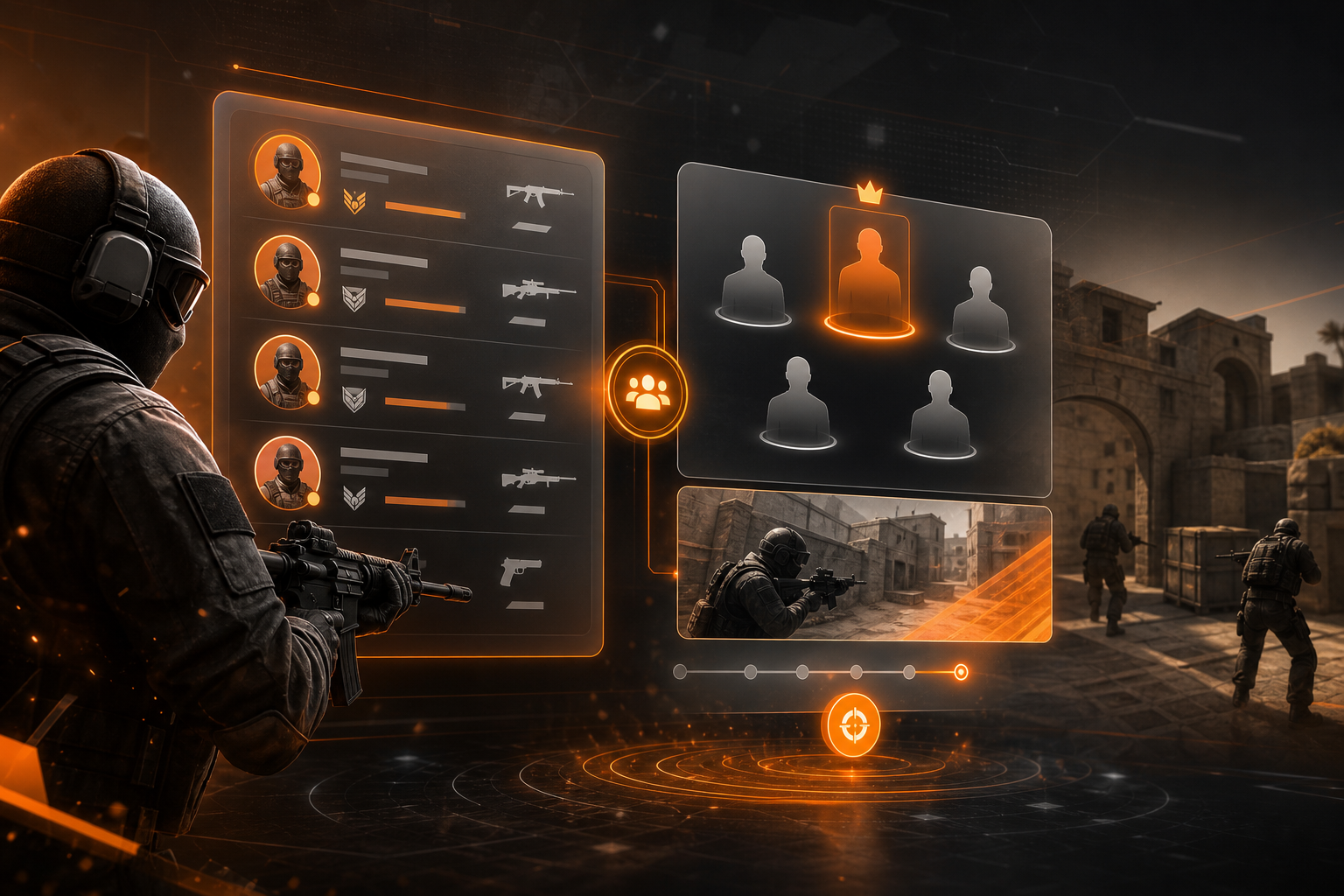
Competitive pickup matches are becoming harder to organize well: players need a fair lobby, a trustworthy roster and a way to get into a match without losing time to queue friction. The shift is not simply toward faster matchmaking. Ranked updates and competitive tools increasingly make lobby composition, player eligibility and roster status visible parts of the experience.
For teams, organizers and platform operators, roster dashboards and instant lobbies can turn those moving parts into something players can understand and act on. Their value depends on how well they reflect the rules of the game or competition, how quickly they update, and whether the information helps players make a better decision rather than merely adding another screen.
What roster dashboards and instant lobbies change in competitive pickup matches
A roster dashboard gives a team or organizer a shared place to manage the people registered for a competition. An instant-lobby feature reduces the steps between finding other players and forming a match. Together, they address two different sources of friction: uncertainty about who is eligible to play, and uncertainty about when a suitable game will happen.
That distinction matters. A dashboard does not balance a match by itself, and an instant lobby does not guarantee balanced teams. But when matchmakers are tightening their rules and competitions are enforcing roster locks, tools that expose status and make a match available quickly help players navigate the system with fewer surprises.
Direct answer: Roster dashboards make team membership and competition requirements easier to manage, while instant lobbies help players form matches as soon as compatible participants are available. They work best when they show current, actionable information and complement,not replace,ranked matchmaking and competition rules.
For a pickup player, the practical questions are immediate: Is this lobby for the right game mode and region? Are the players close enough in skill for a competitive match? Can the registered roster actually participate? Is the lobby open now, or is it waiting on a condition that is not visible? A well-designed flow makes those questions answerable before the match begins.
The broader change is that lobby composition is being treated as a competitive variable rather than a hidden backend detail. Recent updates from VALORANT, Apex Legends and Rocket League expose different parts of that shift: rank consistency, skill distribution and post-match MMR visibility. Meanwhile, team dashboards and instant-lobby services address the operational layer around those systems.
How ranked updates are reshaping competitive pickup matches
Ranked matchmaking sets expectations that carry into pickup play. If players experience uneven teams, unexplained rank gaps or encounters with heavily stacked squads, they may judge the match as unfair even when the queue found a game quickly. Recent changes show developers paying closer attention to the composition of the lobby, not only to the time it takes to fill one.
Rank consistency and party composition
In its June 2026 Competitive update, Riot said VALORANT was making adjustments to improve consistency of player ranks in Competitive lobbies, with the average rank of each team kept within one sub-tier. This is a specific team-average target; it should not be mistaken for a guarantee that every player on both sides has an identical rank or role.
That distinction has direct implications for pickup platforms. A lobby that displays individual ranks can help players understand the skill range they are accepting, but a team-average comparison may be the more relevant signal for judging balance. Platforms should avoid presenting a single average as proof of fairness if role distribution, party structure or other match conditions can also affect the experience.
Riot’s earlier Competitive design notes also say matchmaking takes pre-made party size into account and aims to optimize for similar premade sizes on both teams. That matters because a group of players entering together has a different coordination profile from a collection of solo players. A pickup system that matches only on rank can miss that structural difference.
Skill distribution versus queue speed
Apex Legends’ September 2026 matchmaking test results describe a different approach to lobby construction. EA said the matchmaker pulls 60 available players of similar RP into a lobby, then sorts and splits them. EA also framed the goal as improving match quality, even if Diamond players see more Master or Predator opponents.
The design trade-off is important for both ranked and pickup systems. A matchmaker that waits to find a more suitable player pool may produce a lobby with a more intentional skill distribution, but some participants can encounter opponents whose rank feels distant from theirs. EA specifically identified running into a stacked squad of the game’s best players while your own Rank feels far away as an experience that does not feel good.
That concern is one reason roster and lobby information matter. A player needs enough context to tell whether a match is a balanced challenge, a deliberate high-skill test or simply a poor fit. A dashboard cannot correct the matchmaker’s pool, but it can help a team see the context before committing, where the platform has reliable data and permission to show it.
Lobby signals and post-match feedback
Apex’s February 2026 ranked update added RANKED – DROP ZONES labeling on loading screens and showed each player’s individual Rank Tier in those lobbies. This makes the lobby type and individual rank more visible before play. It is a useful example of exposing context at the moment players need it, rather than leaving them to infer the match’s structure after the fact.
Rocket League’s March 2026 patch moved transparency to the other end of the match. Psyonix said MMR would be displayed on the scoreboard at the end of Ranked Matches. That change can make progression easier to read after pickup-style games, where players may otherwise finish a match without a clear picture of how their rating changed.
These examples do not mean that every game should show every matchmaking input. They do demonstrate a growing emphasis on signals players can interpret: lobby type, visible ranks, MMR movement and team-level balance. For a pickup platform, matching the timing of a signal to the decision is as important as adding the signal itself.
Why roster dashboards matter when competition rules get stricter
Organized play adds constraints that ordinary queues may not have. Teams register members, follow roster limits and meet deadlines. If those details are scattered across messages or documents, players can discover a problem only when it is too late to fix it. A roster dashboard provides a live operational view, but its accuracy depends on how closely it reflects the official competition rules.
FACEIT’s September 2026 help documentation describes Team Home as a private, members-only dashboard where league teams manage rosters. It also says roster limits are determined by the league format. Those details point to a practical design principle: a roster interface should represent the rules of the specific competition, rather than assume one universal roster size or workflow.
Locks, limits and registration state
PUBG’s 2026 Global Series rules require teams to submit updated rosters by 11:00 AM local time on match day and allow up to five registered players. Call of Duty’s 2026 Challenger rules also emphasize timing: players are seeded using points at the close of registration, and online tournament points are locked before seeding.
These rules make roster status time-sensitive. A dashboard should therefore distinguish between a roster that is being edited, one that has been submitted, and one that is locked or otherwise final under the relevant rules. Where a platform can reliably surface the deadline and current state, it helps users act before a lock rather than interpret a late rejection.
For an organizer, useful roster information may include:
- Membership: who is attached to the team and who can access team-only tools.
- Eligibility: whether a player meets the competition’s stated requirements, when that status is available from an authoritative source.
- Capacity: how many registered places are available under the format in use.
- Timing: the relevant submission deadline and whether the roster can still be changed.
- Match readiness: whether the registered players are available for the upcoming lobby, without implying that availability alone confirms eligibility.
A dashboard should not silently turn an organizer’s interpretation into an official ruling. If eligibility is determined by a tournament operator, the interface should identify that authority and distinguish its own status indicators from a decision made by the competition. That separation helps teams understand what they can fix themselves and what requires an administrator.
Roster visibility is not roster control
There is an important limit: a dashboard can make roster data easier to inspect, but it cannot make an unregistered substitute eligible or override a roster lock. Nor can it guarantee that information from an external tournament system has synchronized correctly. Where roster state is imported, the interface should make the last successful update and any synchronization problem visible, instead of presenting stale data as current.
For the same reason, team access should be deliberate. FACEIT describes Team Home as private and members-only, a useful reminder that roster administration can contain information intended for the team rather than the public. Organizers should choose which fields are visible to opponents, spectators and members, and avoid exposing personal or account details that are not needed to run the competition.
How instant lobbies reduce friction without promising a fair match
Traditional matchmaking asks a player to enter a queue and wait for the system to assemble a game. Instant-lobby approaches put more emphasis on visible openings: a player can find or post a lobby, and other compatible players can respond. That can make pickup play feel more immediate, particularly when the participants want to choose a mode, region or playstyle rather than join an opaque queue.
Flicker describes a model in which players can filter by game, mode, region and playstyle, and says a new lobby appears the moment someone posts it. The benefit is straightforward: an available match can become discoverable as soon as it is created. It does not establish that every posted lobby fills instantly, or that everyone who joins is evenly matched. The feature reduces discovery friction; the quality of the match still depends on the participants and the platform’s rules.
Make the waiting state useful
Queue time is not only an issue of duration. It can also be a loss of useful activity if players have to abandon the rest of the product while waiting. Rocket League’s March 2026 patch says the matchmaking menu was updated to better support players who want to stay in gameplay-focused activities while queued. That is a different response to waiting: instead of treating the queue as a blank interval, the interface supports continued play.
For platform teams, these are two complementary patterns. An instant lobby makes an open game visible and actionable; an active queue experience lets the player do something else while matchmaking continues. Which pattern is appropriate depends on the game, the rules for joining mid-activity and the expectations of the community.
When designing instant-lobby discovery, treat the following as separate filters rather than one vague suitability score:
- Game and mode: the basic requirements for a valid match.
- Region: a player’s preferred or supported service area, with the actual connection quality still requiring measurement.
- Playstyle: a stated preference that helps organize participants but is not a verified skill measure.
- Rank or rating: a useful matching input when it is current and comparable across the participants.
- Party structure: whether people are arriving as a group or individually, where the system can represent that accurately.
These labels need clear meanings. A “region” choice is not the same thing as a measured latency guarantee. A “playstyle” tag is not an objective ranking. A rank field may describe a player’s current tier without revealing the full distribution of a team’s skill. A transparent interface can help players make informed choices while avoiding certainty it cannot support.
Joining should be a low-friction, high-clarity action
Instant access can create confusion if players cannot tell whether they have joined, whether a lobby is still open or whether the host has started the match. A practical flow should give each state a distinct label and should update it when the underlying lobby changes. For example, a user needs to distinguish an open lobby from one that is full, closed or awaiting a host action.
The same principle applies to cancellations. If a player leaves or a team withdraws, the lobby should not remain discoverable as if it were ready. If a match requires a minimum number of players or a confirmed roster, make that condition visible before the join action. These are product recommendations, not guarantees supplied by instant-lobby technology: the platform has to implement the state model and keep it synchronized.
Designing live roster and lobby dashboards for dependable operations
Real-time information is only valuable if users can tell what it means and trust that it is current. ScrimSync’s 2026 changelog says it keeps lobby names and note actions usable while rank requests are loading, blocked or unavailable, and adjusts live lobby row visibility for match tracking. That example highlights a useful operational distinction: a lobby can remain manageable even when one source of enrichment data is unavailable.
In other words, a platform should not make basic coordination depend on every external lookup succeeding. If a rank request fails, users may still need to identify the lobby, add a note or track its status. A resilient interface preserves those core actions and marks missing information rather than hiding the entire row or implying that an unavailable rank is a zero, a rejection or a confirmed value.
Separate core state from enrichment
For an engineering team, a useful starting point is to separate the data required to operate a match from optional context that improves it. Core state can include the lobby identifier, game mode, region selection, participants and whether the lobby is open. Enrichment can include rank requests, display names from another service or competition-specific metadata, depending on what the platform is authorized and able to retrieve.
This separation supports graceful degradation. The user can still see and manage the match if an enrichment service is slow, blocked or unavailable. The interface can show a pending, unavailable or last-updated state for the relevant field without pretending the rest of the lobby is invalid. ScrimSync’s handling of rank requests and usable lobby notes illustrates the value of keeping ordinary coordination available during those conditions.
Make freshness and ownership legible
A dashboard should help users answer who owns a change and when it took effect. A team member editing a roster, a tournament administrator locking it and an automated matchmaking service reporting a player’s tier are different actors. Clear ownership reduces the risk that users mistake a provisional update for an official one.
Where information changes quickly, the interface can also signal freshness in a way that matches the data source. Avoid claiming a roster is current if the platform has not confirmed synchronization. Avoid displaying a rank as live if the source is a cached request. If a data field is unavailable, state that plainly and keep unaffected actions available where possible.
These details are particularly important when a lobby is forming. Players may use the visible roster and rating data to decide whether to join; organizers may use it to confirm that the intended competitors are present. A mismatch between display and actual state can create disputes even when the underlying matchmaking logic is sound.
Account trust and matchmaking eligibility are part of lobby quality
Competitive integrity is not limited to skill balance. Games and competitions also need to decide who can enter a competitive pool, whether an account meets security requirements and how parties are treated. Recent updates show that eligibility controls and account trust are increasingly connected to the quality of the lobby a player sees.
Riot’s January 2026 Competitive restrictions require accounts detected for sharing and all Ascendant+ players in EU to enable Riot Mobile MFA to access the Competitive queue. Call of Duty’s June 2026 anti-cheat update says players who fail TPM 2.0/Secure Boot attestation are placed into separate matchmaking pools and cannot match with secure or console players.
These are examples of eligibility and security policies, not proof that a roster dashboard can validate every aspect of a player’s account. A platform should avoid suggesting it has checked a requirement unless it has a reliable connection to the system that enforces it. Instead, it can show the competition’s stated requirements, link a user to the appropriate action where supported, and identify when a decision belongs to the game or tournament administrator.
Protect fairness without hiding the rules
When players cannot access a queue, they need a useful explanation where the responsible service provides one. A generic “not eligible” message can leave a participant unable to tell whether the issue is a roster lock, a missing security step, an account restriction or a temporary service failure. Clear reason categories can reduce avoidable confusion, but they must not expose sensitive enforcement details or promise an appeal outcome the platform cannot control.
Account trust also affects instant lobbies. A public or community lobby may have different access controls from a game’s official ranked queue. Organizers should say whether a lobby is casual pickup, scrim practice or part of a sanctioned competition, and which rules govern it. Calling every skill-filtered room “ranked” can create expectations of enforcement and integrity that the product may not provide.
Security measures can also create access friction. A player required to enable MFA or meet a device-attestation condition may be unable to join a particular pool until that step is complete. A roster dashboard can help a captain identify a readiness issue before match time, but should not make sensitive account status broadly visible to other teams unless the competition requires and permits it.
A practical workflow for teams, organizers and platform operators
The strongest implementation is not the one with the most widgets. It is the one that connects roster readiness, lobby creation and match context in an order that reflects how people actually prepare to play. A small number of explicit steps can prevent a team from discovering a critical mismatch after the lobby is already underway.
- Define the match type. State whether the lobby is an informal pickup match, a practice scrim or a competition fixture. Use the correct game, mode and region details, and clarify which rules control participation.
- Confirm roster state. Check the registered players and the applicable limit. Where a competition has a lock or submission deadline, show the deadline and whether the roster can still be changed. PUBG’s five-player limit and match-day submission time are competition-specific examples, not defaults for other events.
- Check eligibility through the authoritative route. Distinguish platform checks from game or tournament enforcement. For rules such as Riot Mobile MFA in the affected VALORANT queue or Call of Duty’s stated device-attestation policy, direct participants to the responsible system rather than claiming an independent verification that is not available.
- Set the lobby criteria. Choose the mode and region, then decide which rank, party-size or playstyle signals matter. Treat filters as criteria for discovery, not as a guarantee that every match will be balanced.
- Expose the lobby state. Make clear whether the match is open, full, waiting for a condition or closed. Keep the status current as participants join, leave or the host changes the lobby.
- Review the match context before play. Show relevant rank or lobby-type information when it is reliable and appropriate. Do not collapse individual tiers, team averages and party composition into a single unexplained score.
- Capture the outcome and feedback. Where the game provides it, expose post-match information such as MMR visibility. Record operational issues separately from player opinions about balance so organizers can tell a failed process from a difficult but valid match.
This workflow gives different users a clear role. The captain manages who is on the team and whether the team is ready. The organizer applies the event’s roster and seeding rules. The platform makes the available lobby and its status understandable. The game’s matchmaker or ranked system remains responsible for the matchmaking rules it controls.
It also leaves room for different operating models. A community that values speed may allow players to post an open lobby and use broad filters. A league with fixed rosters may require confirmation before the match can start. A ranked environment may need to defer to the game’s queue rather than recreate matchmaking outside it. The product should make those differences explicit instead of forcing one workflow onto every kind of competition.
Trade-offs, failure modes and ways to evaluate the experience
More visibility does not automatically produce better matches. Showing ranks can help players assess a lobby, but rank is only one representation of skill and may not capture how a party performs together. Tightening a skill pool may improve the intended distribution while changing which opponents a player encounters. Apex’s test description makes that tension explicit: better match quality is the goal, even if Diamond players see more Master or Predator opponents.
Likewise, faster lobby discovery is not the same as lower latency. A region filter can help participants select an appropriate location, but the platform should not treat the selected region as a measurement of the connection they will actually receive. Teams concerned about network quality need appropriate telemetry or in-game indicators; a lobby listing alone cannot establish a stable route.
Common product and operations risks
- Stale roster data: a dashboard shows an earlier lineup after a change or lock. Indicate synchronization state and provide a clear route to the official roster record.
- Misleading rank summaries: one average hides individual differences or party structure. Label the metric and show the underlying values only where appropriate.
- False certainty about eligibility: a third-party lobby tool implies that a game account has passed requirements it cannot verify. Separate guidance from authoritative status.
- Unclear lobby lifecycle: an open listing remains visible after it has closed or filled. Use explicit states and update discovery when the lobby changes.
- Too much friction before joining: excessive fields and checks can undermine the speed that makes pickup play useful. Ask for information that serves a real matching or competition need.
- Exposed private information: roster and account fields become visible beyond the intended audience. Use role-based access and show only the details needed for the task.
Operators should evaluate the process as well as the match outcome. Useful questions include whether players can tell what they are joining, whether roster problems are found before a lock, whether missing external data blocks routine lobby management, and whether a closed lobby disappears from discovery promptly. These questions can be examined through support cases, organizer feedback and product telemetry where collection is appropriate and disclosed.
For match quality, teams can compare player perceptions with the signals the system exposes, while avoiding the assumption that a single rank measure explains every result. The aim is to identify recurring mismatches: for example, whether party sizes frequently differ, whether players repeatedly encounter a lobby type they did not expect, or whether the displayed roster diverges from the lineup used in play. Any measurement plan should define its terms before drawing conclusions.
There are also cases where a roster dashboard or instant lobby is not the right substitute for the game’s own queue. A sanctioned ranked mode may rely on game-side matchmaking, account eligibility and enforcement that an external platform cannot reproduce. In that setting, a companion dashboard can still support scheduling, team readiness and post-match review, while leaving queue construction to the game.
What the 2026 changes signal for competitive play
Across the examples, the direction is not a single universal matchmaking formula. VALORANT’s team-average rank target and attention to premade size, Apex’s similar-RP player pool and split, Rocket League’s MMR display, and lobby-type signaling all expose different dimensions of match context. Their common thread is increased attention to what is in a lobby and how players understand it.
Roster rules reinforce that shift from the organizational side. FACEIT’s private Team Home dashboard, PUBG’s registration deadline and player limit, and Call of Duty’s seeding and points lock show why team composition is not just a list of names. It can affect access, readiness and how an event is seeded. A live dashboard can make those constraints easier to operate, provided it faithfully represents the competition’s actual process.
Instant lobbies and in-queue activity address a related but distinct concern: keeping the path to play useful. Flicker’s filterable, newly posted lobbies support discovery, while Rocket League’s queue-menu change supports continued gameplay during matchmaking. Both approaches reduce a form of waiting friction, but neither removes the need for clear match criteria or trustworthy state.
For technical teams, the practical conclusion is to design around the full match lifecycle: preparation, discovery, joining, play and review. Treat roster status and eligibility as governed data, lobby state as a real-time operational object, and ranks as contextual signals with limitations. Make the interface resilient when external data is missing, and make it clear which system has authority over each decision.
Roster dashboards and instant lobbies are reshaping competitive pickup matches by making their organization and availability more visible,not by making balance automatic. The most dependable experience combines transparent rules, accurate roster state, meaningful matchmaking context and a low-friction way to find or enter a game.
For teams and organizers, the next step is practical: audit how players learn a lobby’s mode, roster, eligibility and current status before they join. For platform builders, prioritize freshness, clear ownership and graceful handling of unavailable data. Those fundamentals make competitive pickup play easier to trust, even as ranked systems and competition rules continue to evolve.