Master team timing and utility as smoke and explosions interact
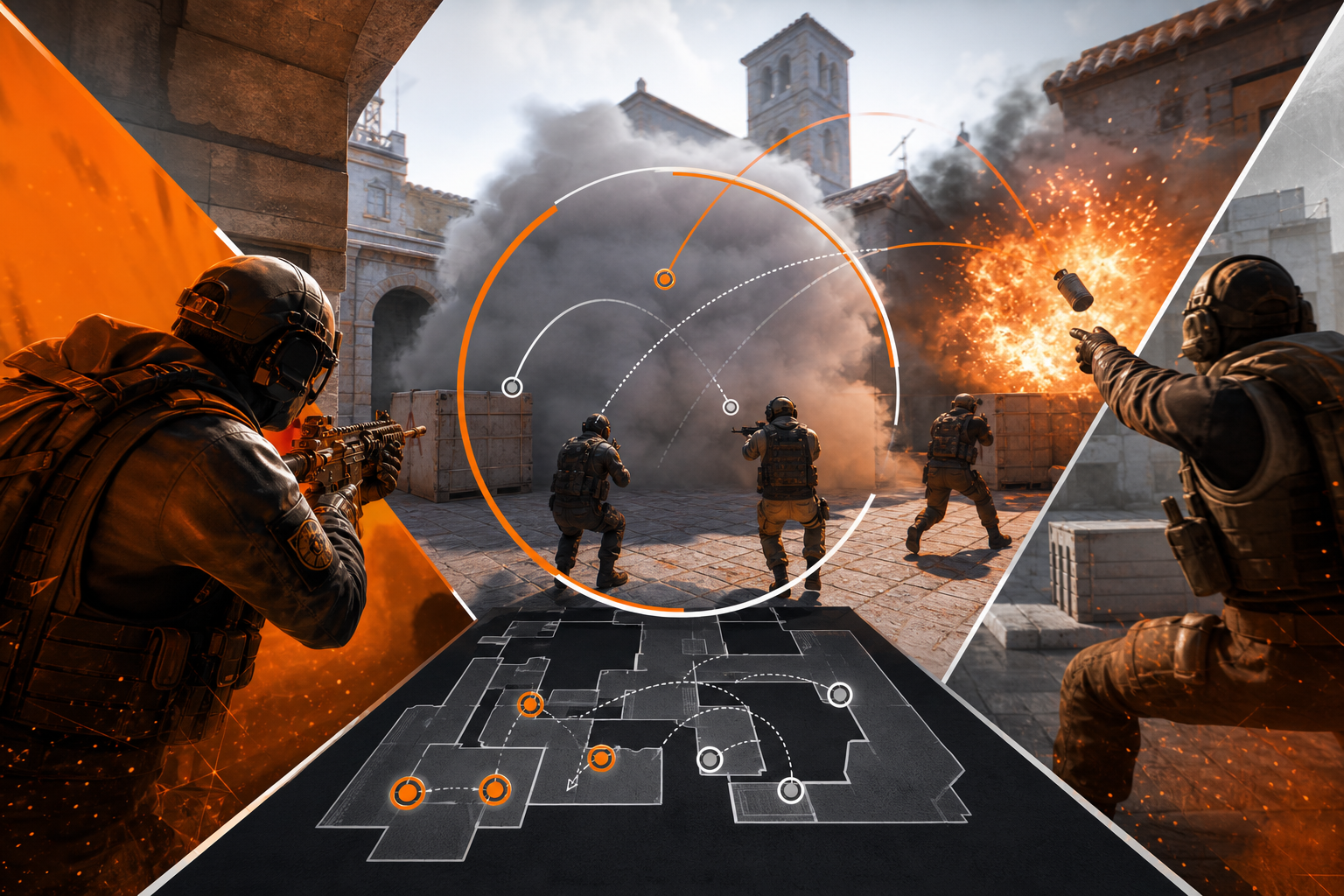
In CS2, smoke is no longer just a flat layer of vision denial. It is a volumetric system that interacts consistently across players, explosions, and fire, which means timing, spacing, and team coordination now matter more than ever. For competitive teams, the tactical value of smoke is tied directly to when it blooms, how it overlaps with utility, and how opponents can read or counter that sequence.
That shift has practical implications for players, analysts, and infrastructure teams supporting competitive environments. When smoke and explosions interact predictably, teams can build more reliable execs, retakes, and late-round conversions around exact utility windows. In a game where milliseconds decide whether a rotate lands or a site falls, understanding those windows is part of competitive infrastructure, not just game sense.
Why CS2 smoke timing is fundamentally different
CS2’s smoke grenades are volumetric 3D objects rather than the older static model, and Valve stated that the upgrade extended to explosions, fire, smoke, muzzle flashes, and other effects. That matters because utility now behaves as a shared space effect rather than a simple on-off visual blocker. Teams can no longer treat a smoke as if it were a guaranteed binary wall; they have to account for how it occupies space and how other utility alters that space.
Liquipedia notes that smoke grenades detonate only after completing their movement, which is why lineups and long-range set pieces rely on exact release and travel timing. If a team throws a smoke too early or too late, the rest of the execute can desync. In professional play, that desync often gives defenders the extra second they need to reposition, re-scope, or re-take a crucial angle.
This is why CS2 utility is best understood as a timing system. The smoke itself is not the whole play; it is the clock that other actions are measured against. Coordinated teams are now rewarded for precise sequencing, while sloppy spacing between smokes and follow-up damage can be punished more reliably than in previous Counter-Strike versions.
How HE grenades changed the smoke equation
Valve has repeatedly tuned HE grenade and smoke interactions in CS2, which shows that this layer of utility remains an active balance area. One documented change reduced HE grenade effect time on smokes, while a later update made HE explosions inside smoke clear the accumulated smoke-screen effect on players within range. Those changes create more consistent outcomes, but they also make timing thresholds more important for both sides.
A March 30 update added another meaningful constraint: HE grenades no longer affect smokes through walls. That directly impacts utility layering and anti-stack timing. Before that change, teams could rely on indirect splash interactions to pressure a smoke or punish players near it; now they need cleaner geometry and clearer information on when the damage is actually supposed to connect.
The tactical result is simple: if your execute depends on a grenade landing before or during a smoke state, you must plan around the exact moment of contact. A late HE may fail to create the intended disruption, while an early HE can be absorbed by spacing that the defenders have already anticipated. At the highest level, those small differences determine whether a site entry becomes clean or collapses into a stalled posturing round.
Using smoke as a timing tool, not just a vision tool
Liquipedia’s smoke-grenade entry makes an important point: smoke can be used defensively to delay pushes and buy seconds for rotations or site adjustments. That means smoke is not only about denial of sightlines; it is also about controlling the rhythm of the round. A well-placed smoke can force attackers to pause, re-clear, or burn more utility before they commit.
HLTV’s spectator guidance frames utility as a system for control, information denial, damage, and counter-utility, and teams often use it to force rotations before hitting the other site. In practical terms, a smoke can be used to manufacture uncertainty long enough for defenders to over-rotate. Once those rotations move, the offensive team can pivot into a weaker site or exploit a gap in the defense’s utility cycle.
That is why smoke timing is so important in modern CS2. A smoke placed too early may give defenders time to adjust, while a smoke placed too late may arrive after the decisive window has already closed. The best teams treat smoke as a scheduler for the round, not a static object in the lane.
Coordination windows in executes and retakes
HLTV and Liquipedia both describe professional executes as coordinated attacks that use synchronized utility to take a bombsite with minimal resistance. That definition is much stricter in CS2 because the smoke system is more consistent across players and more sensitive to spacing. If one player throws off-tempo, the entire execute can lose its pressure curve.
In a clean execute, the smoke should support flash timing, entry timing, and post-plant spacing. If the smoke blooms before the flashes are ready, defenders can prefire the choke. If the explosions and smokes overlap correctly, however, the attacking team can force defenders into unhelpful positions, reduce crossfire value, and convert the entry into a manageable trade sequence.
Retakes work the same way in reverse. Defenders who understand smoke timing can use HE damage, delayed peeks, and counter-smokes to reclaim space in a structured sequence rather than a rushed gamble. The team that understands the utility window first usually wins the information battle, and in CS2 that often means winning the site.
Distance, sound, and the information layer
Valve also added adjustments to smoke grenade sound timing at a distance, which is a useful reminder that smoke is not only a visual mechanic. It is also part of the information game, influencing how teams interpret timing, distance, and possible map control. If players hear smoke cues differently at range, then the value of that cue depends on where they are, what else is happening, and whether the round is already being manipulated by fake pressure.
That matters for analysts and coaches because sound timing can change how a team reads an execute. A distant smoke cue can create a false sense of urgency or a delayed response depending on the setup. When paired with utility layers and occasional HE interaction, the auditory side of smoke becomes part of the decision-making process rather than background noise.
In coordinated play, this means teams should review not only the placement of smokes but also the exact sequence in which they are heard and seen. The more precise that sequence, the harder it becomes for defenders to distinguish a real hit from a timing fake. That is especially relevant in pro-level Counter-Strike, where information control is often worth more than raw damage.
Post-plant pressure and late-round control
Liquipedia notes that a CT can still defuse while standing in smoke, which changes how teams should think about post-plant utility. A smoke is not always a hard stop; sometimes it is only a temporary concealment layer that buys time for the planter’s team to reposition. If the defenders understand that, they can use timing, sound, and support utility to force the defuse anyway.
This makes post-plant smoke timing a critical late-round skill. Teams often need to align smoke duration, HE pressure, and crossfire discipline to make the bomb impossible to tap safely. If a smoke fades too soon, the defenders regain a clean line of sight. If it lasts through the critical defuse attempt, it can force a risky guess, but only if the attackers are positioned to punish it.
Because CS2’s smoke interactions are more consistent, teams can prepare more reliable post-plant sequences. But that consistency also helps defenders calculate their counterplay. The round becomes a contest over when the smoke ends, when the damage lands, and whether the attacking team has enough spacing to protect the bomb after the first contact.
What teams should train for now
Teams should train smoke and explosion interactions as a timing module, not just as isolated utility mechanics. That means reviewing lineups, damage windows, and spacing between the first smoke and the follow-up HE or flash. It also means rehearsing what happens when the enemy destroys the pace by delaying, spamming, or re-smokeing the key area.
Coaches and analysts should pay special attention to executes where the attack succeeds only because the defenders are late to respond. HLTV’s Meta Monday analysis describes a round where a team threw utility, delayed the hit, and then struck once CT utility expired and rotations moved away. That is the model teams should study: not merely a fast hit, but a timed hit that exploits the opponent’s utility exhaustion.
For technical staff and organizers, the main takeaway is consistency. Competitive infrastructure should support stable server performance, low latency, and reproducible utility behavior so teams can trust their practice. In a system where smoke and explosions are part of the tactical language, even small delays can distort the lesson being learned.
Teams that master these windows will gain an edge in both attack and defense. They will know when to wait, when to force movement, and when to use smoke as a timing device rather than a simple cover object. In CS2, that distinction is now central to winning rounds.
The broader lesson is that smoke and explosions are no longer separate ideas in competitive Counter-Strike. They are linked parts of a timing network that defines how executes, retakes, and post-plants unfold. Teams that internalize that network can make better decisions under pressure, while everyone else is left reacting to utility they failed to synchronize.