Adapting team rotations and economy to magazine reloads in Counter-Strike 2
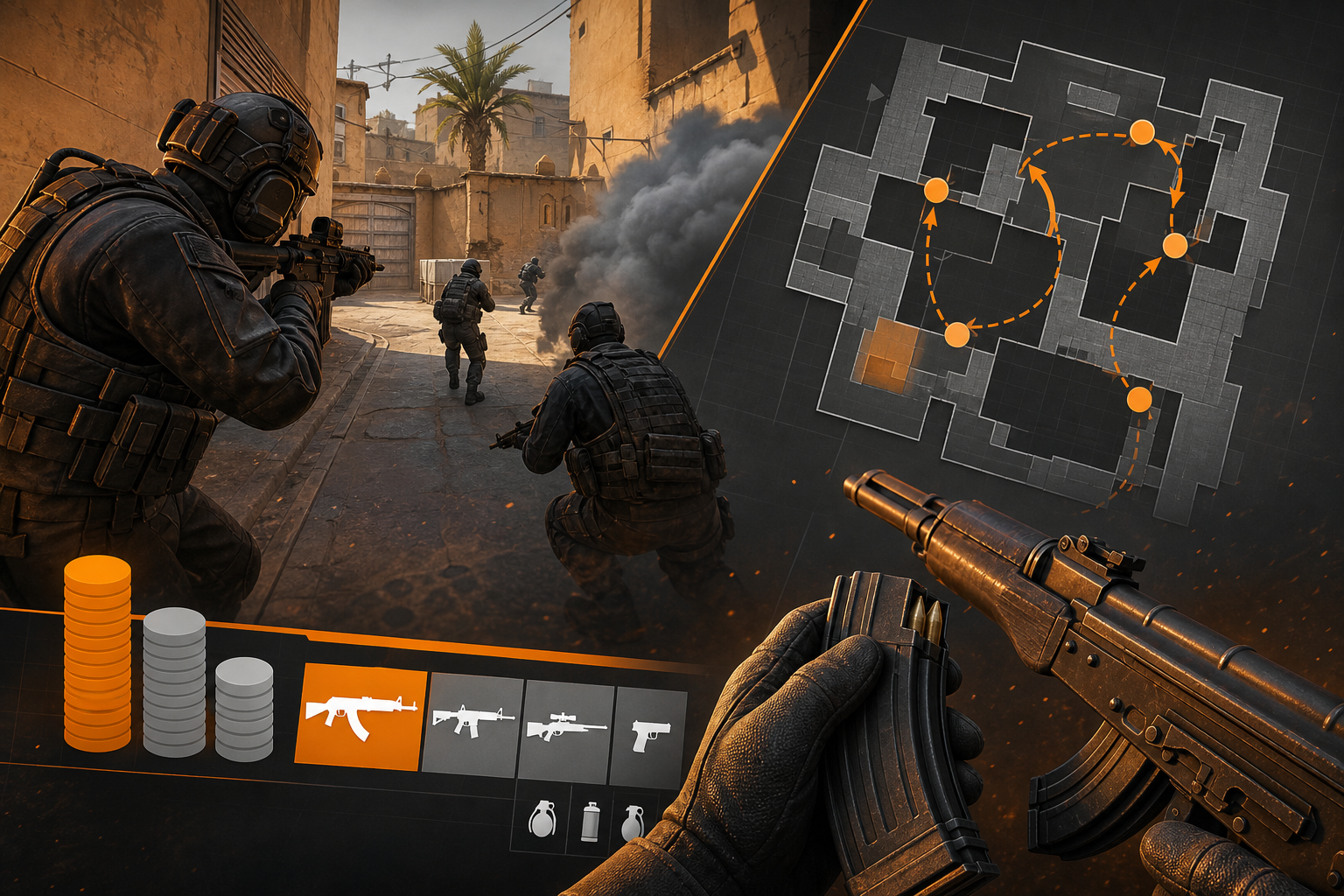
Counter-Strike 2’s March 18, 2026 reload update changes more than a small mechanical detail. By discarding leftover bullets when a magazine is reloaded, Valve turned reload timing into a commitment with real round impact, especially in the kinds of team situations that competitive play depends on: trading, spacing, and rotation timing.
For teams, analysts, and infrastructure staff following the pro meta, this is not just a weapon-handling tweak. It changes how players should think about economy, how much value a defender can get from a single life, and when a team can safely pivot between holding a site and rotating to support the other side of the map.
Why the reload change matters tactically
Valve’s stated design goal was direct: “the decision to reload should have higher stakes.” That means the old habit of casually topping up after a few shots is now materially worse, because the remaining rounds in the magazine are discarded. In practice, a reload is no longer a low-risk reset; it is a hard trade-off between momentary safety and future firepower.
That trade-off has immediate consequences in competitive rounds. A rifler who reloads after two or three shots may win the next duel, but they also may throw away enough ammo to lose a later fight or a retake. The new system makes ammo management part of player discipline, not just an animation timing detail.
It also changes how teams evaluate pressure moments. A smoke spam, a connector hold, or a contact defense now punishes indecision more severely because every reload can reduce the number of meaningful shots a player contributes over the full round. This is especially visible when a team is trying to stretch a defensive hold with minimal utility.
Reloads, trading, and safe windows
In older CS timing models, many teams treated reloads as something that could be hidden behind spacing or a teammate’s presence. That still matters, but the reload itself is now a stronger commitment. If a player reloads at the wrong moment, the cost is not just vulnerability during the animation; it is also the loss of remaining rounds in the old magazine.
This increases the value of structured trading. When a teammate is ready to swing immediately after contact, a player can afford to be more disciplined with reload timing. Without that cover, a reload becomes a liability that the enemy can exploit through wide swings, prefires, or multi-man pressure.
For coaches and analysts, this means “safe reload windows” should be reviewed as a team concept rather than an individual habit. Teams need clearer rules for when to reload after a kill, when to delay until behind cover, and when to simply keep the current magazine until the round state improves.
Economy discipline now includes ammo economy
Competitive economy has always been more than money in the bank. It also includes whether a player extracts full value from the weapons and utility already purchased. The new reload mechanic expands that idea by making wasted bullets an actual hidden tax on each round.
That matters most in economy-heavy situations. On force buys, half buys, or compromised full buys, teams cannot afford to burn through magazine economy with premature reloads. Controlled taps and disciplined bursts become more valuable because they preserve damage potential across longer engagements.
In practical terms, a team that is financially pressured should play as if each bullet has a cost attached to it. Reloading after only a few shots may look harmless, but under the new system it can shorten the player’s effective contribution and weaken the team’s ability to convert the round or keep enough value for the next one.
Weapon-specific magazine counts change planning
The same March 18, 2026 update also adjusted magazine counts by weapon. HLTV’s reporting noted that most weapons gained three spare magazines, the M4A4 got four, and the AWP was reduced to two extra magazines, creating a total of 15 possible AWP shots per round. Those changes matter because they define how often a player can afford to reset.
The AWP change is particularly significant. A sniper rifle already carries a high tactical burden because every missed shot affects map control, rotation timing, and site denial. With fewer spare magazines, AWP users need stronger trigger discipline and better team protection around reload moments, because the weapon now has less room for waste.
Rifles are not exempt from the strategic shift. Extra magazines may soften the pressure in long rounds, but the core problem remains: leftover ammo is lost on reload. That means the optimal weapon plan is no longer just about buying the right gun, but about using each magazine efficiently enough to avoid an avoidable loss of firepower.
Rotation timing under a stricter ammo model
Rotation decisions become more expensive when information is incomplete. If a defender moves early, then has to fight again after a bad reload, the player may discover too late that their meaningful shot count is lower than expected. That makes premature rotations easier to punish and harder to recover from.
For CT teams, the update rewards patience and clearer verification before committing a player away from a site. A defender should rotate because the information is reliable, not because a teammate is under vague pressure. The more the team moves on incomplete reads, the more likely it is to spread ammo value thinly across the map.
This has a direct impact on mid-round structure. Teams may prefer to anchor longer, delay rotations until utility or audio confirms the threat, and reserve re-peek opportunities for players who still have enough ammunition to make the fight meaningful. In other words, movement should be tied to certainty, not habit.
CT anchors, smoke spams, and retake value
Community analysis around the update correctly highlighted that smoke spams and positioning have become more consequential. A CT anchor can still do excellent work through a smoke or from a tight angle, but the ability to sustain that pressure now depends more heavily on how many bullets are actually left in the magazine.
This changes how anchors decide between holding, rotating, or saving. If a player has already spammed heavily, reloading at the wrong time may not just create a timing gap; it may effectively erase the remaining ammunition that would have supported a late retake. That makes the decision to stay on site longer a real value calculation.
Retake setups should also reflect this. Teams should not assume that every defender can re-enter a site at full effectiveness after a long hold. If a player spent most of a magazine on the initial defense, the team may want to assign them utility or a supporting role in the retake rather than expecting another high-volume duel sequence.
How teams should adjust round rules
The simplest adjustment is also the most important: teams need explicit reload rules. A good default is to avoid reloading after minimal engagement unless the player is fully safe, has no immediate trade threat, or is transitioning into a long hold where the current ammo state is truly unfavorable. This reduces accidental ammo loss and keeps the team’s damage output more predictable.
Second, teams should emphasize burst discipline. Controlled taps, short bursts, and coordinated peek timings all gain value because they limit the need for panic reloads. That is especially important on rifles and the AWP, where a single unnecessary reload can create a large downstream cost in a tight round.
Third, callers should integrate ammo state into mid-round decisions. If one site defender has already burned through a magazine, the team may choose not to rotate that player into a high-contact role. If a lurker has enough bullets but limited utility, they may be better suited to holding space than joining a noisy re-clear.
Patch awareness and tournament planning
For organizers and performance staff, patch status now matters more because the reload system is a genuine meta shift. BLAST Open Rotterdam 2026 reportedly stayed on the old patch, which shows that tournament environments were already treating the update as something that could affect strategic fairness and prep quality.
That creates a familiar but important operational lesson: teams should not assume all events are using the same version of the game. Analysts, coaches, and technical staff need to confirm the live patch well before scrims, veto prep, and matchday warmups, because reload behavior changes the details of how a round is played and how a lineup should be practiced.
From a content and broadcast perspective, this also gives editors a clean strategic angle. The official CS2 site remains the primary source for patch truth, while HLTV’s reporting helps translate the update into pro-scene implications. For anyone covering or preparing for competition, both should be part of the same workflow.
Ultimately, adapting to magazine reloads in Counter-Strike 2 is about treating ammo as part of the team economy, not a background detail. The update rewards patience, cleaner comms, and better round structure, especially when rotations and retakes are on the line.
Teams that absorb the change early will gain an edge in the exact situations that decide close matches: holding under pressure, rotating on reliable information, and preserving enough firepower to finish the round. In a game where margins are already thin, reload discipline is now part of competitive discipline.