QuickFrag launches roster dashboards and instant 5v5 lobbies
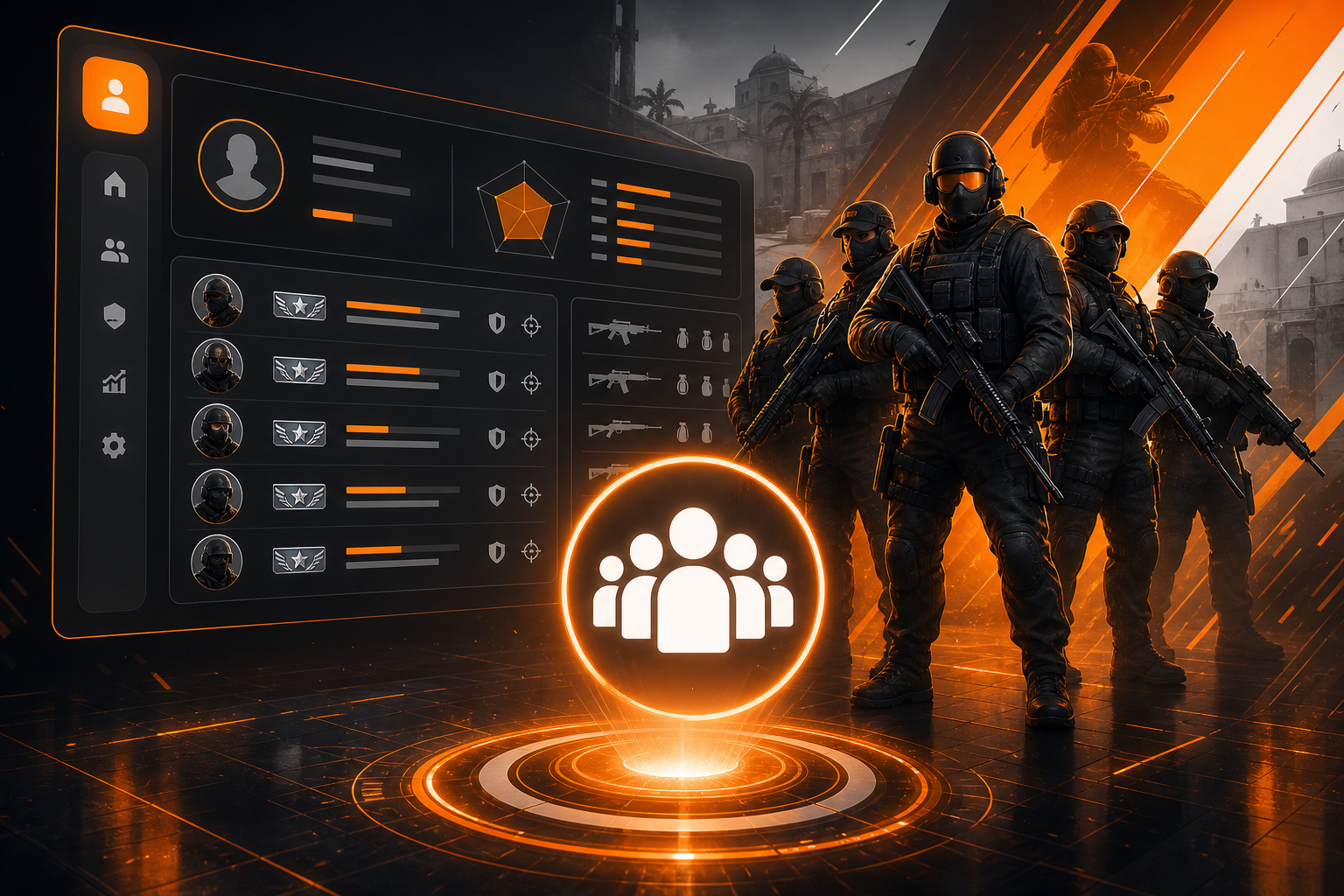
QuickFrag’s latest rollout pushes the platform further beyond basic queueing and into structured team operations. The addition of roster dashboards and instant 5v5 lobbies matters because it reduces the time between intent and play: a team can identify players, verify availability, and launch a competitive server without stitching together separate tools for messaging, scheduling, and server access.
For teams, platform engineers, and organizers, this is less about a cosmetic feature update and more about operational compression. QuickFrag already positions itself around CS2 matchmaking, ELO-ranked play, and match persistence; the new roster and lobby layer makes those mechanics more usable at the team level, where coordination over is usually the real bottleneck.
Roster dashboards bring team management into one surface
The clearest signal in QuickFrag’s current product direction is its team hub. The site now shows active team listings and searchable discovery data, which indicates that roster management is not just a concept page but a live layer in the product. That matters because a team dashboard is only valuable if it reflects current availability, recruitment status, and actual roster activity.
QuickFrag’s “For Teams” positioning reinforces that idea. The platform is designed for organized rosters rather than isolated solo queue users, and it explicitly calls out roster management, recruiting players, and scrim coordination. In practical terms, that means teams can treat the platform as a working operations board rather than a static profile page.
For competition staff, the advantage is reduced fragmentation. Instead of tracking who is trialing, who is active, and which lineups are available in multiple places, the roster dashboard can centralize that information around match readiness. That makes the dashboard useful not just for team leaders, but for admins who need to verify participation and maintain a clean competitive flow.
Instant 5v5 lobbies reduce setup over
QuickFrag’s public matchmaking is built to get players onto competitive 5v5 servers fast. The platform says these matches use MR15 rules, with ELO updates and stats saved after every game, which gives the queue a structured format rather than a casual pickup-game feel. For teams, the result is a standardized path from lobby entry to fully tracked match.
The same logic extends to private lobbies. QuickFrag says private lobby codes and built-in group chat let academy rosters scrimmage without handing out Discord invites every week. That is a small operational detail with a big effect: it cuts repeated coordination work and gives teams a repeatable way to launch controlled scrims on demand.
Instant lobbies are especially valuable in environments where time windows are narrow. If a team has a 30-minute practice block, every minute spent assembling players, exchanging access details, or waiting on server setup is a direct loss. QuickFrag’s lobby flow is clearly designed to minimize that dead time and keep the focus on structured play.
Competitive rules and saved stats make the system useful after the match
QuickFrag describes each match as a structured 5v5 game with two teams, competitive rules, ELO, and performance tracking. That framing matters because the platform is not simply hosting servers; it is preserving the competitive context around them. A lobby that ends without usable data is convenient, but a lobby that feeds a durable player record is operationally stronger.
The feature messaging also says stats are saved to a player profile after every game. That implies dashboard-style post-match tracking, which can support review workflows, player evaluation, and roster decisions. For coaches and analysts, persistent match records are more useful than one-off server logs because they can inform trends across multiple games.
In a practical sense, this makes QuickFrag more than a queueing endpoint. It becomes part of the team’s feedback loop. A roster dashboard can show who is active, while saved match data can show how that roster is performing, making the platform relevant both before and after a scrim or official match.
Private scrims now fit the same workflow as public queues
One of the more important platform choices here is that public matchmaking and private team play appear to share the same broader infrastructure model. QuickFrag’s product page presents the service as a free CS2 matchmaking and team platform with public queues, private lobbies, ELO-ranked play, Clip Studio, and teamplay tools. That combination suggests the platform is trying to support a single competitive lifecycle rather than separate casual and team workflows.
This is particularly useful for rosters that alternate between public games and internal practice. A team can use public queues for skill maintenance, then move into private scrims without changing tools or rebuilding access lists. That reduces context switching for players and removes avoidable administrative work for staff.
The benefit is strongest for academy systems, mixed rosters, and tournament prep groups. Those environments often need both repeatable private sessions and fast public access, and QuickFrag’s current structure appears to serve both. The platform is effectively turning matchmaking into a team operations layer.
Why live team discovery changes roster building
The live team hub is more than a directory feature. Because the page currently shows active team listings and searchable roster opportunities, it creates a discovery mechanism for players and organizations that need to recruit quickly. That is useful in a market where lineup changes can happen between events, not just between seasons.
For organizers, live team discovery also improves visibility into the health of the platform. If the team page is updating today and showing current recruitment details, it indicates an active ecosystem rather than a dormant listing board. That can help build trust for teams deciding whether to invest workflow time in the system.
From a technical standpoint, live discovery implies that roster data is being surfaced in a way that supports current-state decisions. That is exactly what teams need when they are trying to fill a role, replace a player, or build a last-minute scrim group. A static roster page cannot do that job effectively; a searchable live hub can.
Operationally, QuickFrag is replacing multiple tools with one control plane
QuickFrag’s For Teams page is explicit about the problem it is trying to solve: teams should be able to run rosters, recruit players, launch private scrims on dedicated servers, review demos, and host community tournaments without juggling Discord, VPS rentals, and spreadsheets. That statement is important because it defines the product as a control plane, not just a hosting layer.
In practice, this kind of consolidation reduces the failure points that often affect competitive operations. A missed Discord invite, a misconfigured VPS, or a broken spreadsheet can delay a session or corrupt scheduling. By combining team management, matchmaking, and server access in one place, QuickFrag lowers the number of moving parts staff need to maintain.
The addition of roster dashboards and instant 5v5 lobbies fits that strategy cleanly. The dashboard handles who is available and what the roster looks like; the lobby handles getting players onto the server quickly; the match system handles ELO and stat persistence. Together, those layers create a more coherent workflow for competitive gaming teams.
For organizations focused on latency, infrastructure consistency, and repeatable practice environments, that coherence is the real feature. The less time a team spends assembling tools, the more time it spends training, reviewing, and competing. QuickFrag’s update is best understood in that context: it is moving from matchmaking platform toward a team operating system for CS2.
QuickFrag’s roster dashboards and instant 5v5 lobbies are a meaningful step for teams that need speed without sacrificing structure. The platform now appears to support discovery, recruitment, private scrims, and competitive match tracking within the same workflow, which is exactly what organized rosters need when every minute of practice time counts.
If the current product direction holds, QuickFrag will be most relevant to teams and organizers that want fewer tools, faster session setup, and cleaner post-match data. In a competitive environment where operational friction can affect both performance and consistency, that is a practical upgrade rather than a cosmetic one.