Build a resilient five-player strategy after the season 5 map-pool shake-up
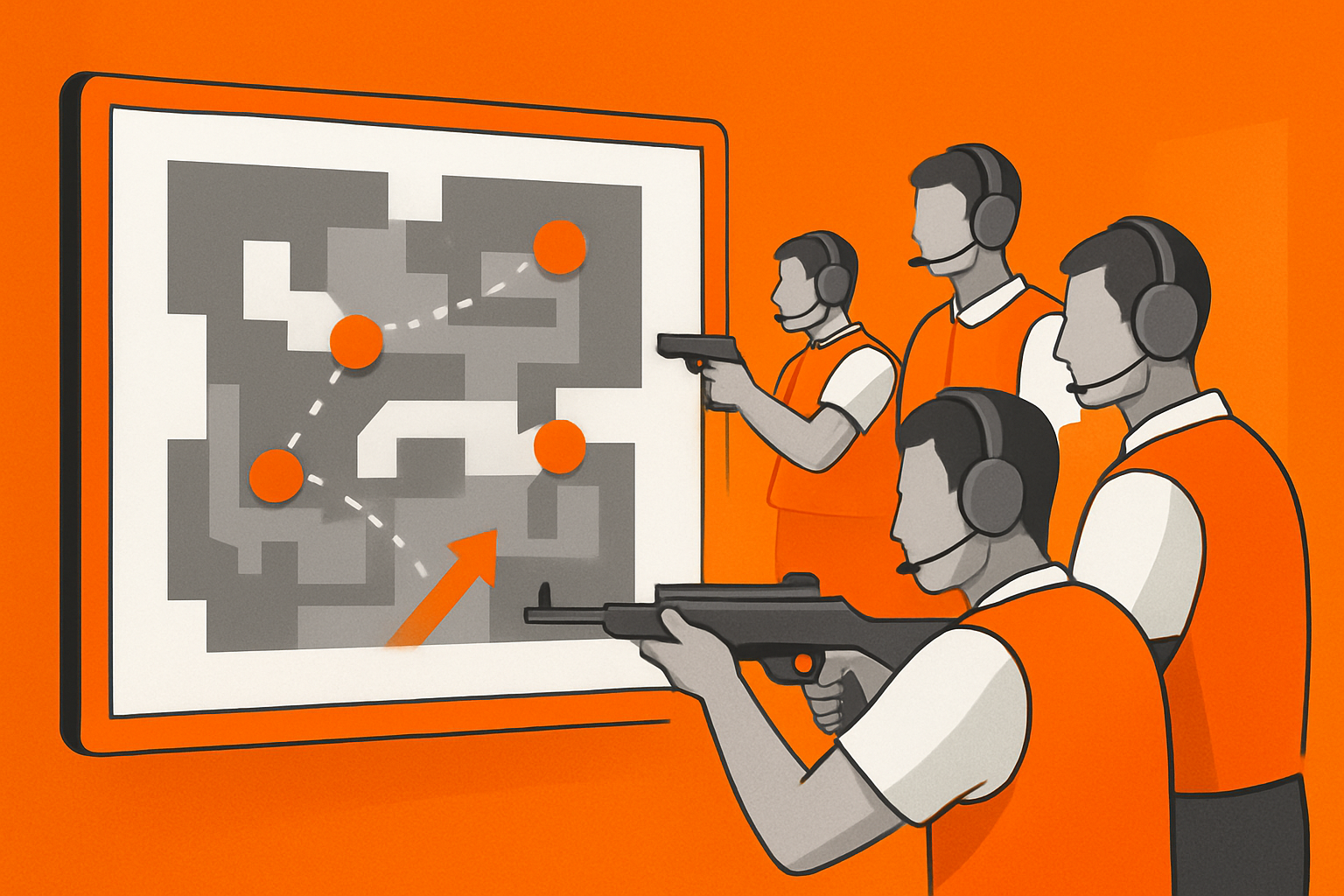
A resilient five-player CS2 strategy after the Season 5 map-pool shake-up cannot depend on avoiding Cache or asking one star player to solve every unfamiliar round. Cache replaces Overpass in the Active Duty Map Pool, so teams need a plan that connects veto choices, role coverage, utility assignments, and practice priorities across all five players.
The practical goal is not to make every map equally comfortable overnight. It is to make the roster functional when the veto removes a preferred option, a player is lost early, or a round moves beyond its opening script. Start with a repeatable five-player framework, then adapt the map-specific details through demos, scrims, and review.
What a resilient five-player CS2 strategy requires after Season 5
Direct answer: Build a veto plan that includes a playable option at every stage, give all five players defined responsibilities on each map, and overprepare Cache until the team has tested its defaults, utility, and mid-round responses. Treat prior Cache experience as a starting point, not proof that old setups still work.
The change is roster-wide. Cache entering the pool and Overpass leaving it affect which maps teams can protect, avoid, or target; they also require teams to revisit roles, utility distribution, and the assumptions behind their practiced rounds. A plan limited to the opening five-player setup is not resilient if it offers no answer when the first contact goes badly or a player falls before the execute.
Season 5 pool decisions are framed around balance and symmetry, including addressing player-position advantages and improving competitive balance. For a team, that is a reason to test how its protocols behave under pressure rather than assume that a familiar map or side setup will remain favorable. Competitive fairness is a pool-level goal; the roster still has to demonstrate that its own assignments and decisions hold up in play.
Use resilience as a practical standard: can the lineup name a viable veto path, establish a clear job for each player, preserve useful utility after an early death, and make a mid-round decision without relying on one caller or one star? If any answer is no, the map-pool response is incomplete.
Build veto depth instead of relying on a single comfort map
A veto plan should describe the team’s choices across the whole sequence, not just the map it most wants to play. A map-pool shift can remove a familiar option from the set of available decisions. If the team has prepared only one preferred route, an opponent can force it into a map or matchup it has not planned to play.
Organize veto preparation around three decisions: what to protect, what to avoid, and what to use against a particular opponent. Each decision should have a reason tied to the roster’s current preparation, not a label that remains unchanged after the map pool changes.
- Comfort-map protection: Identify the maps where the team’s roles and protocols are clearest. Decide which of them merits protection in the veto, while checking that doing so does not expose the lineup to a worse outcome elsewhere.
- Weak-map avoidance: Name the maps where the roster lacks tested plans or dependable role coverage. Avoidance is useful, but it cannot replace a minimum viable plan for the maps the opponent may leave open.
- Opponent-specific punish picks: Choose a map only when the team can explain how its preparation, role matchups, or tactical approach is meant to challenge that opponent. Do not treat a map as a punish pick simply because the opponent has played it before.
Turn these categories into a veto tree. For each likely opponent choice, record the team’s response and the next decision it expects to face. The tree need not predict every possible sequence. Its purpose is to stop the roster from improvising its basic map priorities during a time-limited veto.
Use confidence levels, not permanent labels
For internal planning, mark each map as ready, playable with conditions, or not yet supported by enough practice. These are coaching categories, not claims about a map’s objective difficulty. A map can move between categories as roles are tested and protocols become reliable; update the assessment when review shows that the underlying assumptions have changed.
For example, a team might consider Cache playable with conditions while its core defaults and defensive rotations are being tested. The condition should be specific: perhaps the roster can execute its opening plans but has not yet verified its late-round options, or it has not tested whether utility remains available after an early loss. Record what would change the assessment, then make the next practice block address that gap.
Veto depth also requires honest communication. The in-game leader, coach, and players should agree on what a map rating means and whether it reflects recent practice, role comfort, or opponent preparation. If one person’s “comfortable” means familiar with old Cache and another’s means tested in the current environment, the label hides rather than resolves risk.
Turn Cache experience into a current, testable playbook
Cache’s return gives teams with previous experience a useful baseline. Old playbooks may provide starting points for setups and routes, but the Season 5 environment still calls for fresh grenade lineups, CT spacing, and T-side hit timings. Prior knowledge reduces the amount of work needed to orient the team; it does not eliminate the need to verify what the current five can execute together.
Separate inherited ideas from validated protocols. An inherited idea is a setup or route worth testing. A validated protocol is one the present lineup has practiced, reviewed, and can explain well enough to adapt when an opponent disrupts it. Keeping those categories distinct prevents familiarity from being mistaken for readiness.
Audit the old material before you copy it
Review any available team notes or prior experience by asking four questions. Does the idea still assign a clear job to every player? Does it depend on a particular timing or spacing that the current roster has not tested? Does its utility plan identify who carries each essential piece? Does the round have a fallback if the opening contact produces no advantage?
Keep the parts that answer those questions clearly. Retest the parts that rely on assumptions about positioning, timing, or coordination. Replace anything that leaves a player without a useful role or makes the rest of the round depend on an unverified opening.
Use old Cache knowledge to generate practice questions, not to skip practice. A familiar route becomes part of the Season 5 playbook only after the current five have assigned, rehearsed, and reviewed it.
Build a compact map file as the work progresses. It should record the team’s opening defaults, the purpose of each player’s position, the utility needed to run the plan, and the available continuation if the first action stalls. Keep notes on what has been tested and what remains an assumption. The point is operational clarity, not a long document no one consults.
Review both sides as a connected system. On the T side, check whether the team can vary its hit timing and still understand who is responsible for creating space, supporting the entry, and responding to a rotation. On the CT side, check whether spacing and rotation responsibilities leave the team with an intelligible response when contact occurs. These are questions to test in practice, not fixed claims about how Cache must be played.
Give all five players a job that survives a disrupted round
Map-pool shocks raise the value of multi-role players because a smaller, flexible core is easier to stabilize when familiar map assignments change. Flexibility does not mean that everyone should do everything. It means the five-player structure has enough role coverage to keep functioning when a map or round does not follow the preferred script.
Start from five complementary responsibilities: an anchor, a rotator, an aggressive lurker, a support and utility specialist, and an in-game leader who can call around uncertainty. These are planning functions, not immutable player identities. One player may cover more than one function, but the roster should make the responsibilities explicit rather than assume that someone will fill a gap at the moment it appears.
- Anchor: Define the player’s responsibility for holding space, communicating contact, and buying time for teammates to respond. Identify what information or utility the role should preserve for the rest of the round.
- Rotator: Define what triggers movement, what information is needed before committing, and who communicates the change. A rotation without a clear trigger can leave the team reacting to incomplete information.
- Aggressive lurker: Establish when the player is expected to probe or pressure space, what information the action should produce, and when the player should reconnect with the main group.
- Support and utility specialist: Assign responsibility for the utility plan and for communicating what remains available. The job is not simply to carry grenades; it is to make the team’s intended sequence possible.
- In-game leader: Make sure the caller has a way to gather information, choose among prepared options, and revise the round if the first plan breaks. The caller should not be the only person who understands the team’s mid-round choices.
Test whether role coverage survives map-specific changes. A player who anchors one site on a familiar map may need a different assignment on Cache; the correct answer should come from the roster’s plan and practice, not from assuming that the same player must retain the same job everywhere. A role change should include its communication and utility responsibilities, not just a new starting position.
Make the three-player core less fragile
A “star plus two supports” structure may work when the star has the space and resources to drive the round, but it is vulnerable if the other two players have no defined way to contribute after the opening breaks down. The more robust standard is that every player can contribute to at least one mid-round call, one bombsite hold, and one execute variation.
This does not require five people to become interchangeable callers or entry players. It requires enough understanding to keep the round alive. A support player can identify a useful fallback; an anchor can explain what information changes the defense; a lurker can recognize when reconnecting is better than continuing a solo plan. The goal is contribution within a role, not role confusion.
Use a short role-coverage review after practice. For each player, ask them to explain one mid-round option, one hold responsibility, and one execute variation they can support. If a player cannot describe the decision or the reason behind the assignment, the issue may be a protocol that is too implicit, a role that needs adjustment, or a communication gap to work on.
Redistribute utility so the five-player plan still works after an early death
Utility reallocation is one of the most important macro adjustments after a map-pool change. Smoke, molotov, flash, and grenade assignments should support the team’s default paths, execute timing, and retake plans. If the plan assumes that one player always survives to deliver a critical piece, an early death can remove more than one player from the round: it can remove the utility the other four need to proceed.
For each principal plan, list the utility required, the player assigned to each item, and the point at which it must be used. Then check whether the team can still produce a useful version of the plan if one assigned player dies before acting. The answer may be to reassign a piece, prepare an alternate sequence, or accept that the team should change its call under that condition.
Build a utility ledger around decisions
A practical ledger does not need to be complicated. It should connect a piece of utility to its purpose and to a decision that the team can communicate. For example: who has the smoke for the planned transition, who has the flash that supports the next action, and what call indicates that the team should hold rather than spend it? The specific lineup and timing must be tested on the map by the players who will use them.
- Write the intended sequence. Describe the opening path, the point where the team expects to gather information, and the action it may take next. Avoid treating a list of grenades as a complete round plan.
- Assign ownership. Give each essential smoke, molotov, flash, or grenade to a player, and ensure that the player knows when the item is used and what the team expects to do afterward.
- Test the early-death case. Remove one player from the opening in review or practice and ask whether the remaining four have a viable continuation. If not, identify the missing resource or the call that should replace the original plan.
- Record the fallback. Make the alternate action simple enough to communicate under pressure. A fallback that only the coach understands is not part of the live protocol.
- Review actual use. After a scrim, compare the planned allocation with what players carried and spent. Adjust the assignment when the gap reflects a recurring problem rather than a single unusual round.
On defense, the same logic applies to retake utility and the information needed before players rotate or commit. Establish which pieces are intended for the initial response and which should be retained for a later phase. The roster should know what a player’s death removes from the plan and who, if anyone, can cover the missing function.
There is a trade-off: concentrating utility can make one sequence easier to coordinate, while spreading it can give the team more options if a player is removed. Neither distribution is automatically correct. Choose based on the team’s plan, test the consequences, and make sure the remaining players know when the preferred sequence is no longer available.
Overprepare the least-tested map with a focused practice loop
A resilient team should devote extra scrim volume to the newest or least-tested map instead of hoping the veto keeps it away. For Season 5, Cache deserves deliberate attention because it is the line addition and its return may tempt teams to rely on familiarity. The practical priority is to close the team’s biggest knowledge and coordination gaps, not to claim that a particular number of sessions guarantees readiness.
Use a repeating loop that moves from questions to protocols to review. This makes practice responsive: the team does not simply replay a default because it is familiar, and the staff does not mistake hours spent on a map for proof that the important situations have been addressed.
A four-stage map practice loop
- Identify uncertainties. Before practice, list what the team does not yet know: whether a role assignment works, whether an opening produces useful information, whether a utility sequence survives an early death, or whether the caller has a clear response when the opponent disrupts the plan.
- Test a small set of protocols. Focus each block on a manageable set of defaults, holds, executes, or retakes. The aim is to observe whether the plan is understandable and repeatable, not to collect a long list of unconnected setups.
- Review decisions as well as outcomes. A round result alone does not show whether the protocol was sound. Review what information players had, what call followed, what utility remained, and whether each role understood its next responsibility.
- Update the map file and retest. Record the change, then return to the protocol in a later practice context. A solution that only works when everyone remembers a one-off explanation is not yet a dependable team routine.
Use practice to examine both planned rounds and disrupted ones. Run the intended opening, then discuss how the team should respond if it gains no useful information, loses an early player, or needs to change timing. These situations do not need to be scripted as elaborate new playbooks; they need a shared decision point and a clear communication path.
Balance new-map work with the rest of the pool. Overpreparing Cache does not mean abandoning comfort maps or ignoring opponent-specific work. It means directing extra attention to the map where the roster’s assumptions are least tested, while maintaining enough practice elsewhere to keep the overall veto plan credible.
Use demo review and role testing to shorten the adaptation cycle
Seasonal map-pool changes are common enough that adaptation speed can become a competitive edge. Teams that repeatedly navigate resets benefit from a routine for rapid demo review, role testing, and disciplined anti-strat updates. The important word is disciplined: reacting to every observed round with a new counter can make the playbook unstable, while ignoring useful evidence leaves the team’s assumptions unchallenged.
Separate internal review from opponent preparation. Internal review asks whether the five-player system worked: did the assigned roles communicate, did utility support the call, and could the team continue when the opening changed? Opponent review asks what the other side tends to show and which of the team’s prepared options might create a useful challenge. Keep the two tasks linked, but do not confuse a read on one opponent with a universal map rule.
Review with a consistent set of questions
- What did the team expect to learn from the opening, and did the players communicate the information clearly?
- When the first plan changed, who made the next call and what information supported it?
- Did each player know the role they were responsible for in the new situation?
- Which utility was used, which was retained, and did that match the intended sequence?
- Did the team’s spacing and timing support the decision, or did the plan depend on an untested assumption?
- What one adjustment is worth testing next, and what evidence would show that it helped?
For opponent-specific preparation, focus on actionable observations. A useful note connects an observed tendency to a prepared response, identifies which player communicates the trigger, and leaves room for the opponent to vary its behavior. Avoid converting one demo read into a rigid prediction. A counter-strategy is a choice the team can make with information, not a script that must be forced regardless of the round.
Keep role testing controlled. If a player changes responsibilities, identify what the change is meant to solve and review whether it improves coverage or creates a new gap. Changing several assignments at once may make the result hard to interpret. Where possible, test the role adjustment alongside a familiar protocol so the team can distinguish a role issue from a broader execution problem.
Staff should make updates visible to the players who need them. A revised smoke assignment, altered rotation trigger, or new fallback must reach the relevant people before it is expected to appear in a match. A shared map file and concise team review can make that handoff reliable; the tools matter less than having one agreed current version of the plan.
Make communication and hosting conditions part of the test
A tactical protocol is only useful if players can execute and communicate it in the environment where they practice and compete. For teams and technical staff, that makes server conditions and latency relevant to evaluation. A scrim can reveal a tactical problem, but staff should avoid treating every timing difference or failed action as a strategy flaw without considering whether the practice conditions were consistent.
Keep infrastructure checks focused on comparability. When reviewing a new Cache protocol, use practice conditions that are as consistent as the team can reasonably maintain, and record any unusual server or connection conditions that might affect interpretation. The goal is not to attribute every lost round to infrastructure; it is to avoid drawing a confident tactical conclusion from a test whose conditions were unclear.
Technical staff can support the coaching process by making sessions and their review material easy to identify. Keep map, side, lineup, protocol focus, and relevant technical notes together in the session record. This helps the team distinguish a role experiment from a routine scrim and makes it easier to trace why a protocol was changed.
Use a simple escalation path when play feels inconsistent. First establish whether the issue is repeatable across the session; then check whether communication, role understanding, or utility assignment explains it; finally review technical conditions if the tactical evidence remains ambiguous. This sequence keeps infrastructure in scope without using it as a default explanation for strategic failures.
For competition organizers and platform teams, predictable conditions also help teams evaluate their work fairly. Operational consistency cannot guarantee a tactical outcome, but it makes it easier for a roster to compare practice observations and decide whether a map-specific adjustment is worth keeping.
Measure readiness by coverage, not by confidence alone
Teams need a practical way to decide whether the Season 5 response is ready for a veto. Confidence is useful, but it can reflect familiarity or recent success without showing whether the lineup has covered the situations that matter. Use observable checks tied to the team’s actual protocols.
Before calling a map ready, review whether the roster can explain and perform the following:
- A veto route that protects a comfort option, avoids a weak option where possible, and includes an opponent-specific choice when preparation supports one.
- A defined responsibility for all five players in the principal opening plans and in at least one fallback.
- A working utility allocation for defaults, executes, and retakes, including a plan for an early death.
- A shared trigger for a mid-round change, with more than one player able to contribute information or a useful option.
- A current map file that distinguishes tested protocols from inherited ideas and unresolved assumptions.
- A review process that turns demo or scrim findings into a limited, testable update rather than a collection of disconnected reactions.
If a check fails, treat it as a specific work item. “We are bad at Cache” is too broad to guide the next practice. “The four remaining players do not know which utility sequence replaces our opening after an early death” identifies a decision, a communication need, and a testable adjustment.
Readiness is also relative to the team’s intended use of a map. A roster may be able to play a map with a narrow set of prepared choices before it is ready to use that map as an opponent-specific punish pick. Keep the claim proportional to what the team has actually tested. This helps coaches avoid overrating a map and helps players understand what the veto plan is asking them to execute.
Turn the map-pool reset into a repeatable team process
The Season 5 change is a concrete prompt to strengthen the way the roster handles future map-pool changes too. Cache replaces Overpass now, but the durable advantage comes from a workflow the team can reuse: assess the veto, identify role gaps, redistribute utility, overprepare the least-tested map, and update the playbook through review.
Assign ownership for each part of that workflow. The in-game leader can organize the in-round decisions and communication triggers; players can validate that their roles and utility assignments are usable; coaches and analysts can coordinate review and opponent preparation; technical staff can help make practice conditions and records consistent. These responsibilities can overlap, but each task needs an owner so that adaptation does not depend on everyone assuming someone else has handled it.
Keep the process lightweight enough to repeat. A short list of map confidence levels, a veto tree, a current map file, and review notes tied to specific protocols are more useful than a large collection of unverified ideas. After each review cycle, retire notes that no longer reflect the plan and mark newly tested options clearly.
Finally, treat flexibility as structured choice rather than constant improvisation. The best five-player response is not a team with no fixed roles or defaults; it is a team whose roles and defaults leave room for another player to help when the round changes. If every player understands one useful mid-round contribution, one hold responsibility, and one execute variation, the lineup has more ways to stay coherent when the veto or the match does not follow expectations.
For Season 5, build the foundation around veto depth, current Cache preparation, explicit role coverage, and utility that remains useful after a player is lost. Make the plan specific enough to practice, flexible enough to adapt, and honest enough to distinguish what the team knows from what it still needs to test.
Then use each demo and scrim to close one identifiable gap. That disciplined cycle is what turns a map-pool shake-up from a forced reset into a repeatable opportunity to make the whole five-player system more resilient.